
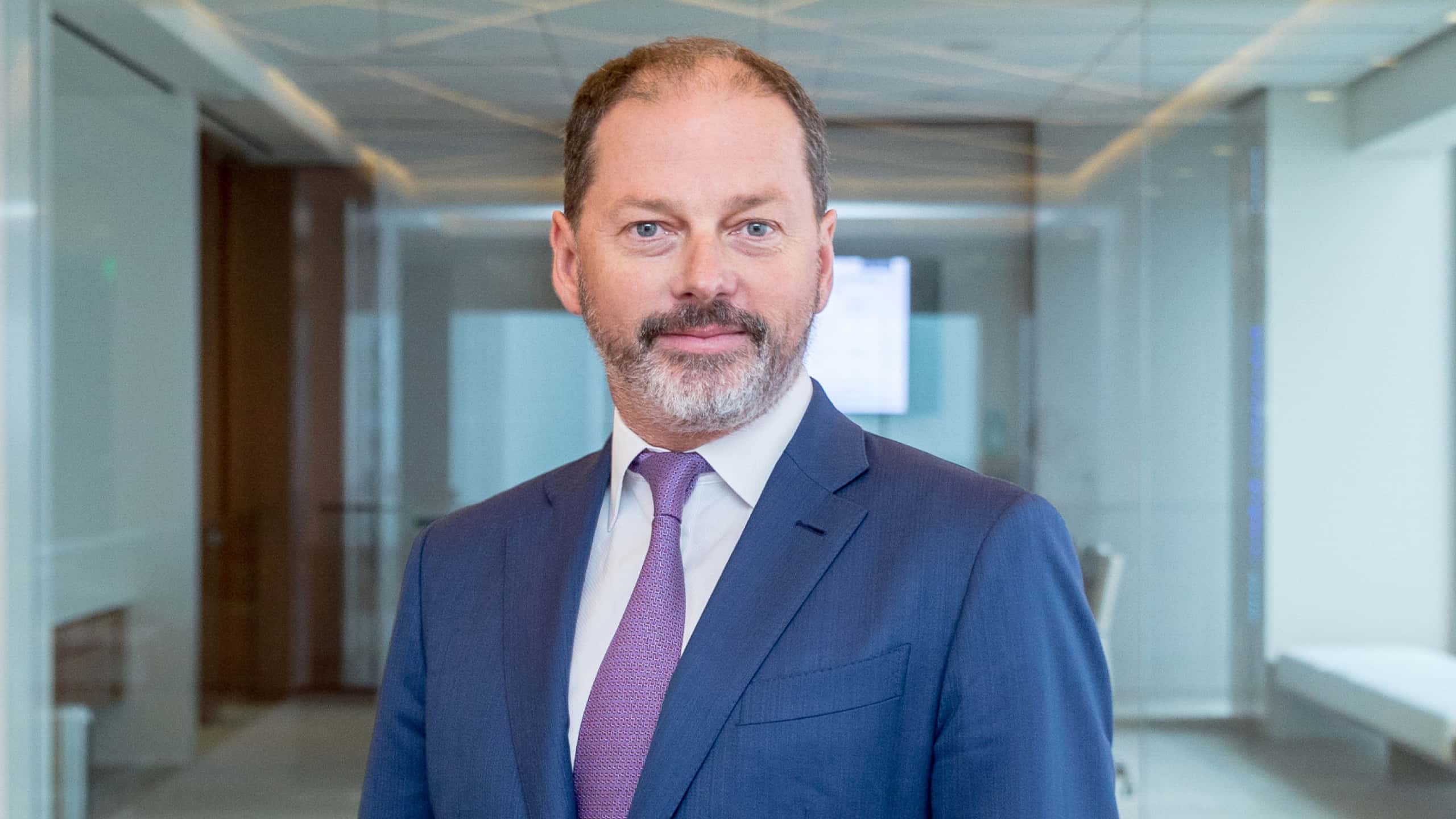

Adam Bowe: Hi, I'm Adam Bowe, head of the Australian portfolio management team here at PIMCO and I'm joined by Rob Mead, Co-head of the APAC portfolio management team, at least for the next couple of weeks, and soon to be chair of PIMCO Australia.
Text on screen: Adam Bowe, Head of Australian Portfolio Management
Rob, given it’s your last couple of weeks with portfolio management responsibilities here at PIMCO, I thought I'd give the account managers the month off and we could do a final trade floor video together. You've been in the finance industry for 35 years, PIMCO for over 22 years. We've worked together for 14 of those. So I want to lever off that experience for our clients today and maybe start by asking, how are you seeing markets? You've been through many cycles in that career. Is there anything flashing orange or red on your market dashboard currently?
Rob Mead: Yes, thanks Adam for that. Those numbers are a little scary, I must admit. I guess there are some really important takeaways, that we want to share. I guess when I look back at my career, I navigated at least three crises. At least.
Text on screen: Rob Mead, Co-Head of APAC Portfolio Management
So there was obviously the dot-com bubble. I think that might have been before your time.
Adam Bowe: That’s just as I started, that was deflating.
Rob Mead: So, at least I've got one on you. Then it was followed up by the GFC and then the pandemic. So the first two really have some things in common. It was really coming back to more fundamental market pricing. Obviously, dot-com was all about elevated risk premium, especially equity risk premium, unrealistic earnings expectations. Some echoes for today.
Adam Bowe: Yes, very much so.
Rob Mead: Second of all, the GFC was a little bit more about the credit risk premium. Obviously there was a hugely overvalued U.S. housing market. The U.S. household was extended. There was very cheap financing. And the structured credit market was extremely levered. So all of these things are building up to a levered unwind. So when I think about those events and I look at the market today, it does make me feel a little uneasy. Not panicking, but a little uneasy.
So if you think about equity risk premium or credit risk premium, they both look pretty fully valued, if not expensive. When you think about the liquidity backdrop at the moment, are investors getting paid sufficiently for giving up liquidity? I would argue that maybe even the illiquidity premium is heading negative because there's so many investors not wanting their portfolios marked to market, or at least not very often. So it provides a little bit of a skewing there.
Inflation is proving a little sticky. So if you think about the way that central banks can respond when inflation is closer to the top end of their range rather than in the middle or the bottom, if we do get into some sort of economic stress, then maybe they can't support markets to the same degree. So there's a lot of things out there that are flashing orange. I don’t think there's much that's legitimately red right now. But investors should be a little cautious.
Adam Bowe: Yes I've certainly learned over the last 14 years to feel very uneasy when you start feeling uneasy. So through that lens, what are the investment implications? What should our clients be thinking about right now as we head into 2026?
Rob Mead: Yes, so just building upon that backdrop, there's a couple of other things that I'd even bring in, that investors are finding, obviously very topical to discuss, but also important about building their portfolio. So the first one is, again, especially in the bond market. So for us, involved in everything from government bonds all the way through to local structured credit, one of which, a very large deal, we were both involved with more recently domestically.
There's also this big theme around AI and how that's going to be funded. We've already seen large borrowers tap the global bond markets. We do know we’re only at the very front end of that process. They need to obviously build out energy infrastructure and also data centres. So without that funding availability to that sector, the multiples in the equity market just won't be sustainable. So I think there's a couple of really important themes.
The good news for investors today, though, is that yields are still high. Given that backdrop, yields are still high. And despite central bank easings, we've still got elevated yields. And so expected returns are high. Yields are high. We do know that when investors make decisions, you and I, and again growing up in the PIMCO environment, we're always conscious of bias.
So one of the most important biases is recency bias. So when I think about the investor experience going into the pandemic, the pandemic, going in, the yields were already low. So there wasn't really the benefit of bonds in a portfolio context.
If these orange lights flashing are legitimate, this time going into any downturn, bonds will protect portfolios. Expected returns are high, as we mentioned. Investors should think about 6 or 7% or even more if we get into a distressed environment.
I guess one of the unique features of this cycle is, structural shifts we're seeing in, at least unique for Australian investors, some structural shifts we're seeing in some of the local markets that investors have used as alternatives to core bonds for income generation.
Adam Bowe: Yes, I couldn't agree more.
Rob Mead: When we look back on our careers in Australia, I guess the biggest competitor to bond markets for a long time or to core bonds in particular, was Aussie bank hybrids.
Adam Bowe: Yes, very true.
Rob Mead: Now they've been regulated away. So investors are looking for alternatives. The other thing that's been much more recent has been the build up of domestic private credit. Now it's a great opportunity. People should definitely be involved but at the right scale.
And also, going back to that point, don't give up your liquidity too cheaply. You can get a lot of return in daily liquid core bonds. So just be very mindful of giving away liquidity too cheaply.
Adam Bowe: I guess it should come as no surprise to any of us given the rise in yields in recent years that a seasoned bond portfolio manager is actively taking the opportunity to step away from executive duties, given the wealth of opportunity to generate income into the future now. Rob, congratulations on an incredible career.
Rob Mead: Thank you. Adam.
Adam Bowe: Very welcome. While this may be Rob's last trade floor video, myself and the rest of the Sydney investment team, including Aaditya, Rachel, Juraj and John, and also some special PIMCO offshore guests next year, we'll continue this series into the future.
As always, if there's any questions or follow ups, please contact your PIMCO account manager. And from all of us at PIMCO, have a happy festive season and we'll see you in early 2026.